
Victoria Hospital Bangalore: History, Haunting, and the Ghost Who Steals Food

Some buildings carry their history in their walls. Victoria Hospital in Bangalore carries its history in its stones, literally. Parts of it were built from rubble salvaged from Bangalore Fort, a fortress that fell to the British in 1791. The hospital rose in 1900 to fight a plague that had already killed roughly 10% of the city. More than a century later, it still operates, still treats thousands of patients daily, and still generates ghost stories that locals repeat with a straight face. Is it haunted? That depends entirely on who you ask.
- Victoria Hospital was founded in 1900 to combat Bangalore’s 1898 Bubonic Plague, which killed approximately 10% of the city’s population (Citizen Matters).
- The most specific ghost legend involves a “lady in white” said to steal food packets left overnight, a detail reported consistently by security staff.
- A second ghost, a former matron, is said to patrol the wards checking on patients.
- Strange activity near the hospital morgue has been reported by staff members.
- All ghost claims come from informal accounts and folklore sources. No verified evidence exists.
What Is Victoria Hospital and What Makes It Haunted?
Victoria Hospital is one of Bangalore’s oldest and largest public hospitals. Its foundation stone was laid on June 22, 1897, by Maharani Regent Kempananjammani of Mysore to commemorate Queen Victoria’s Diamond Jubilee, and it was formally inaugurated on December 8, 1900 by Lord Curzon, Viceroy of India (Karnataka Government). Today it runs over 1,000 beds across 23-plus departments. The haunting reputation? That grew organically over a century of tragedy, pestilence, and death.
The hospital’s full official name is now Shantaveri Gopala Gowda Hospital. Almost nobody uses it. “Victoria Hospital” is what Bangaloreans call it, have always called it, and will likely keep calling it. Names carry weight. So does history. And this building has both in unusual amounts.
What draws ghost hunters here isn’t staged drama. It’s the quiet accumulation of suffering. A plague hospital that watched thousands die. A century of surgeries. A functioning forensic medicine department with a morgue. Gothic-Victorian architecture that looks exactly like the setting of a ghost story, because architecturally, it is.
The hospital is affiliated with Bangalore Medical College and Research Institute (BMCRI) and has been since 1955. It’s a teaching hospital, a trauma centre, and a community institution. The ghost stories exist alongside all of that. One doesn’t cancel the other.
How Did a Bubonic Plague Kill 10% of Bangalore and Birth This Hospital?
The 1898 Bubonic Plague didn’t just kill people. It reshaped Bangalore’s entire medical infrastructure. According to Citizen Matters, the outbreak killed approximately 10% of the city’s population. The Mysore government’s response was drastic: hospitals across the region expanded from 24 in 1881 to 178 by 1918, and plague expenditure consumed 36% of the government’s fiscal deficit in 1899 alone.
Victoria Hospital was set up specifically to handle that outbreak. It started with 140 beds and by 1905 was performing over 1,500 surgeries annually. Think about what that means for a hospital that was barely five years old. The pace of death and treatment was relentless. The building absorbed all of it.
Here’s a detail that tends to stop people cold. Parts of Victoria Hospital were built using stones from the walls of Bangalore Fort, captured from Tipu Sultan by Lord Cornwallis in 1791. The British didn’t just repurpose the land. They literally used the physical material of that fort to construct this hospital. ASI-protected ruins remain on-site to this day, according to historical records cited by the BMC Literary Club and Wikipedia.
There’s an original photograph of Queen Victoria preserved inside the hospital. Gothic-Victorian architecture frames the complex. The adjacent Minto Ophthalmic Hospital (1913) and Vani Vilas Hospital (inaugurated 1935) form the larger Fort Hospital complex. Vani Vilas, incidentally, is the birthplace of actor Rajinikanth, which is a very different kind of historical footnote for the same compound.
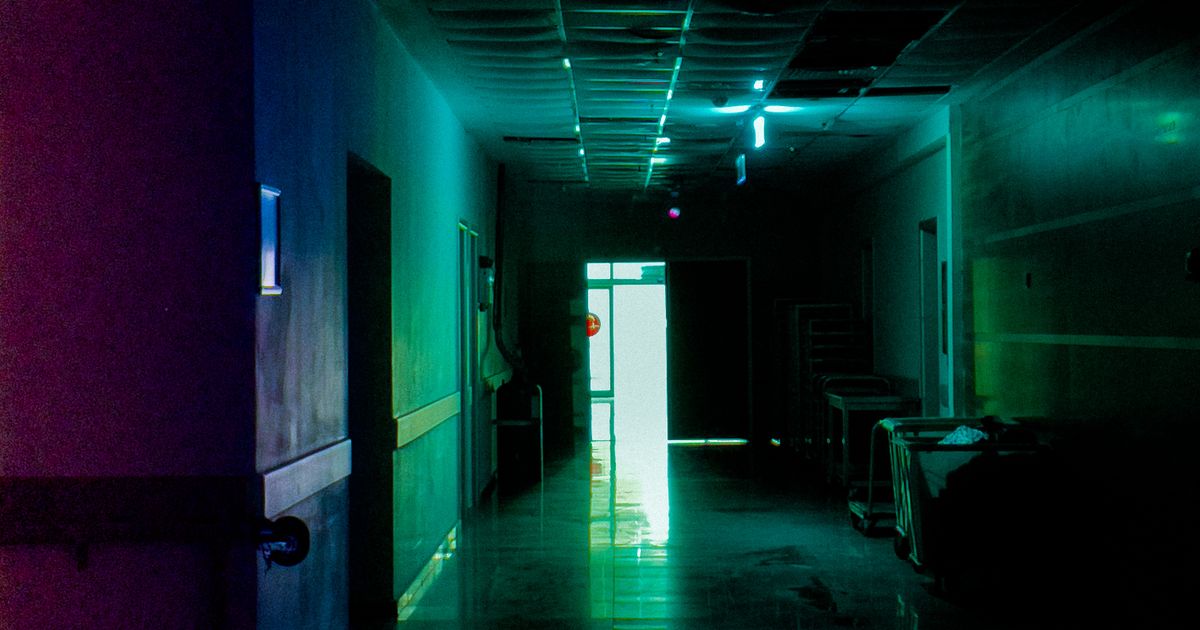
For those who believe places absorb the weight of what happens in them, Victoria Hospital had an extraordinary volume of death concentrated in a very short time during the plague years. Whether that matters supernaturally is a question for each reader. Historically, it’s simply a fact.
If you’re drawn to India’s colonial-era haunted locations, Bhangarh Fort offers a parallel kind of layered history, where legend and documented events sit uncomfortably close together.
Who Is the Lady in White at Victoria Hospital?
The most persistent ghost story at Victoria Hospital involves a woman. She appears in white, she wanders the wards at night, and she cries. Security guards are the most common sources for this account, reported across platforms including TravelTriangle and Thrillophilia. She’s described, in the tradition of Indian ghost folklore, as a “lady in white.” But what separates her from the generic ghost-woman template is one specific, strange detail.
She steals food.
Multiple accounts from security staff claim that food packets left overnight go missing. A woman is reportedly seen taking them. That’s the detail that makes this story stick. Generic ghosts drift through walls and make cold spots. This one apparently gets hungry. Or maybe she’s feeding someone. The accounts don’t explain it. They just report it, consistently.
She’s also said to sit in the trees within the hospital compound after dark. That image, a weeping woman in white perched in a tree at night inside a functioning hospital campus, is distinctly unsettling. It also maps closely to Karnataka’s broader folklore traditions around female spirits associated with trees and liminal spaces. The Nale Ba legend from Karnataka shows how embedded these feminine-spirit narratives are in the region’s ghost culture.
Worth being direct about the sourcing here. These stories come from travel and paranormal websites, not hospital records, not police reports, not academic documentation. They’re folklore. They’re what guards tell each other, what visitors whisper, what gets passed along. That doesn’t make them false. It also doesn’t make them verified.
What Other Spirits Are Said to Haunt the Wards?
The lady in white gets most of the attention, but she isn’t the only figure in the folklore. A second ghost is described in several accounts: the spirit of a former matron, still roaming the wards. She doesn’t cry or steal food. She checks on patients. She’s reported as a presence rather than a dramatic apparition, a figure that staff sense more than see, continuing her professional duties long past death.
That’s a different kind of ghost story. Not a woman trapped in grief. A woman trapped in duty. There’s something almost poignant about it, and something that makes it feel rooted in a real place with real professional culture, rather than a generic scare.
The third cluster of accounts centres on the morgue. The forensic medicine department handles post-mortems, legal cases, and bodies that sometimes have no family to claim them. Staff working near that area have reported strange experiences: sounds, sensations, and presences that don’t have obvious explanations. Accounts appear in InUth and similar platforms. None come with specifics that could be independently verified.
Is there a pattern here? Possibly. The hospital has three distinct ghost-types: a suffering spirit, a working spirit, and a presence near the place where the dead are most literally present. Whether that’s meaningful or coincidental is your call.
For comparison, Dow Hill in Kurseong shows a similar layering of tragedy, institution, and persistent ghost legends around a colonial-era building that never quite lost its reputation.
What Do Overnight Visitors Report?
A small number of paranormal investigators and urban explorers have documented visits to Victoria Hospital at night. The challenge, obviously, is that it’s a functioning hospital. You can’t simply walk in after dark with a camera crew. But the hospital’s size, its multiple buildings, its courtyards and older wings, means that getting close is easier than at a sealed heritage site.
Reported experiences from visitors cluster around a few categories. Unexplained sounds in older corridors. A sense of being watched, particularly in the wings adjacent to the forensic department. Temperature anomalies in specific areas. None of these accounts come with data. They come with atmosphere, which is exactly what a building like this generates naturally, haunted or not.

The video below is part of the Haunted India series, Episode 64, focused specifically on Victoria Hospital’s mortuary. It’s in Telugu. Whatever your language comfort, the footage and atmosphere speak without translation.
The tension between rational explanation and reported experience is exactly what makes places like this interesting. It’s the same tension you find at Jatinga, where unexplained phenomena have folklore explanations and partial scientific ones, and neither camp has the full picture.
We’ve found that the most credible accounts from Victoria Hospital visitors share one quality: they’re understated. No dramatic possessions, no screaming, no definitive proof of anything. Just a persistent feeling that a building this old, which has seen this much death, doesn’t feel entirely empty.
Should You Visit Victoria Hospital?
Victoria Hospital is an operational government hospital currently serving thousands of patients daily across 23-plus departments including neurosurgery, oncology, and nephrology. That single fact should govern any conversation about visiting for paranormal purposes.
What you can do is visit the hospital grounds during normal hours, as visitors to patients do every day. The Gothic-Victorian architecture is genuinely worth seeing. The ASI-protected fort ruins on the property are a remarkable piece of Bangalore’s layered history. An original photograph of Queen Victoria is reportedly preserved inside. These are legitimate reasons to be there.
What you shouldn’t do is attempt to access wards, corridors, or restricted areas at night. This isn’t just legally problematic. It’s disrespectful to patients recovering from surgery, to families in crisis, to staff doing difficult work. Ghost tourism that ignores the living people in a building has lost its ethics.
The Fern Hill Hotel in Ooty offers a Victorian-era haunted experience without those complications, since it’s a hotel that welcomes overnight guests. If you want to sleep inside a Victorian haunted building, that’s a more appropriate venue.
Victoria Hospital’s history is accessible without trespassing. Read about the plague years. Look at the architecture. Understand what those walls have held. That’s the real ghost story here, and it’s documented, sourced, and genuinely extraordinary.
Frequently Asked Questions About Victoria Hospital
Is Victoria Hospital really haunted?
There’s no verified evidence of paranormal activity at Victoria Hospital. The ghost stories, including the lady in white and the matron’s spirit, are local folklore reported by security staff and visitors. They’re consistent and culturally rooted, but they lack documentation. The hospital has been operational since 1900, serving over 1,000 beds across 23-plus departments.
Can visitors go to Victoria Hospital?
Yes, but as a functioning hospital, not a tourist attraction. Visitors accompanying patients are welcome during normal hours. The Gothic-Victorian architecture and ASI-protected fort ruins on the grounds are worth seeing. Night visits for ghost hunting purposes are not permitted and should not be attempted. Respect patients, families, and staff at all times.
What is the history of Victoria Hospital Bangalore?
Victoria Hospital was founded to combat the 1898 Bubonic Plague, which killed roughly 10% of Bangalore’s population (Citizen Matters). Its foundation stone was laid June 22, 1897 by Maharani Regent Kempananjammani of Mysore, and it was inaugurated by Lord Curzon in 1900. It was partly built using stones from Bangalore Fort. Its official name today is Shantaveri Gopala Gowda Hospital.
Who are the ghosts at Victoria Hospital?
Folklore describes two main figures: a “lady in white” who wanders the wards crying and reportedly takes food packets left overnight, and a former matron’s spirit said to check on patients. A third cluster of accounts involves unexplained activity near the forensic medicine department. All accounts come from informal sources, not verified records.
Is Victoria Hospital safe to visit at night?
The hospital campus is monitored by security. Attempting to access wards or restricted areas at night is not permitted, potentially illegal, and disrespectful to patients and staff. For paranormal tourism in Bangalore, better-suited locations exist that don’t involve interfering with an active medical facility serving thousands of patients every day.
A note to readers: Victoria Hospital is a fully operational government hospital serving thousands of Bangalore residents every single day. The ghost stories in this post are local folklore, reported as such, with no claim of factual paranormal verification. If you visit, respect the patients, their families, and the staff. The history here is remarkable enough on its own terms.
